Artistic Statement
Throughout my time as a stage manager, I’ve developed a work style that is situational and transformative. As I see it, adaptability is key to any team. As people working on projects, especially live theatre projects, it’s inevitable for us to meet unexpected challenges. The key to maintaining success isn’t about finding how to prevent every challenge, but rather learning how to accept and navigate ones that arise. Adaptability allows both teams to stay productive, engaged, and harmonious.
Besides this, however, communication, proactivity, empathy, and trust are things that I heavily value. To me, communication and proactivity go hand in hand — to establish effective and healthy communication, one has to be willing to be proactive in initiating that communication. Similarly, to be proactive, one has to be able to communicate effectively with their team, allowing them to both receive and understand relevant information, and to deliver relevant information to their team members.
As I continue my practice, I expect my management philosophy to grow and change. In fact, I’m almost certain that how I approach communication styles and various scenarios will change. At its core, however, my stage management philosophy is very people-centered. Prioritizing trust and empathy are the tenets of my leadership philosophy, as they allow me to lead with kindness. I believe that by prioritizing trust and empathy, I can create an environment that encourages understanding and, ultimately, efficiency.
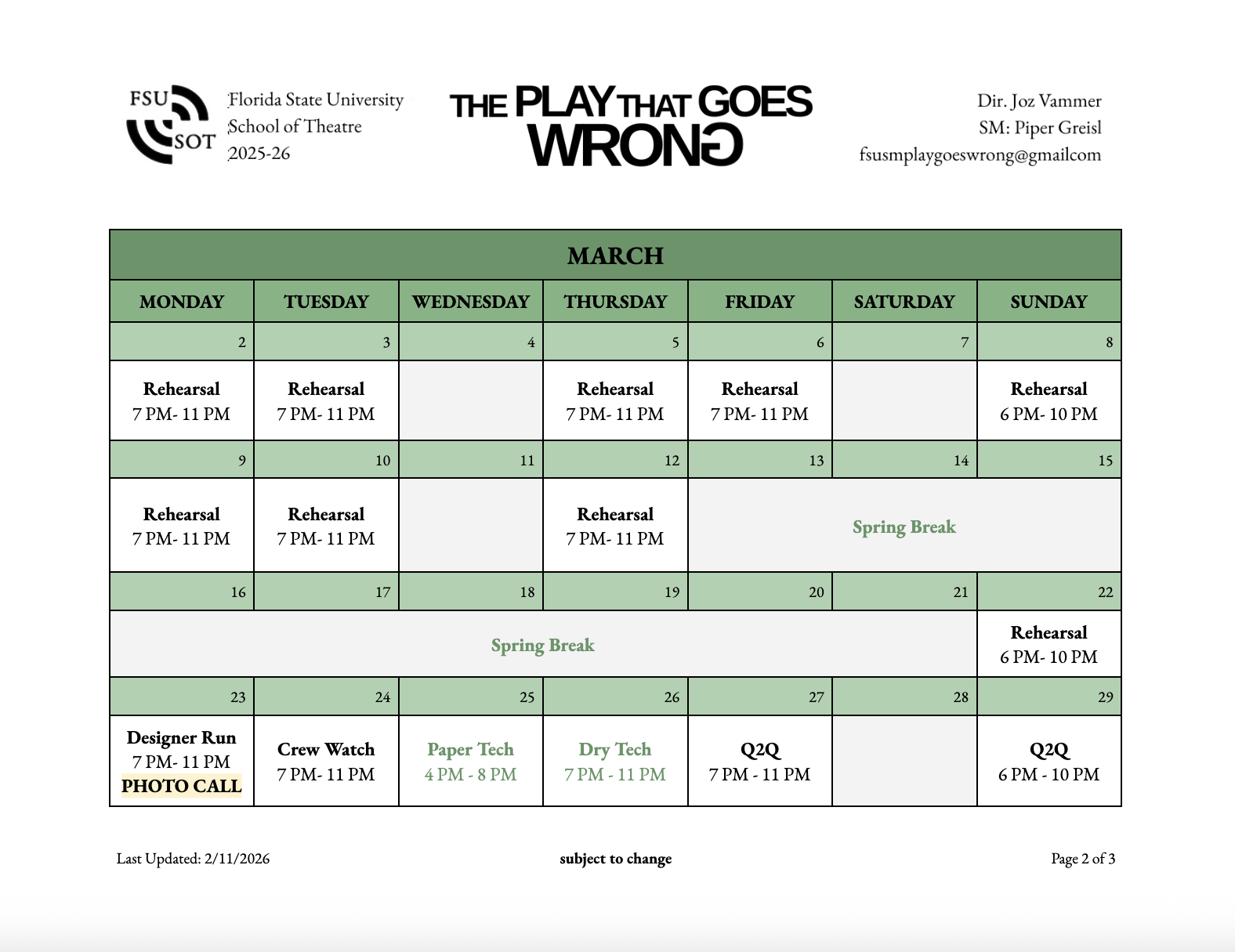
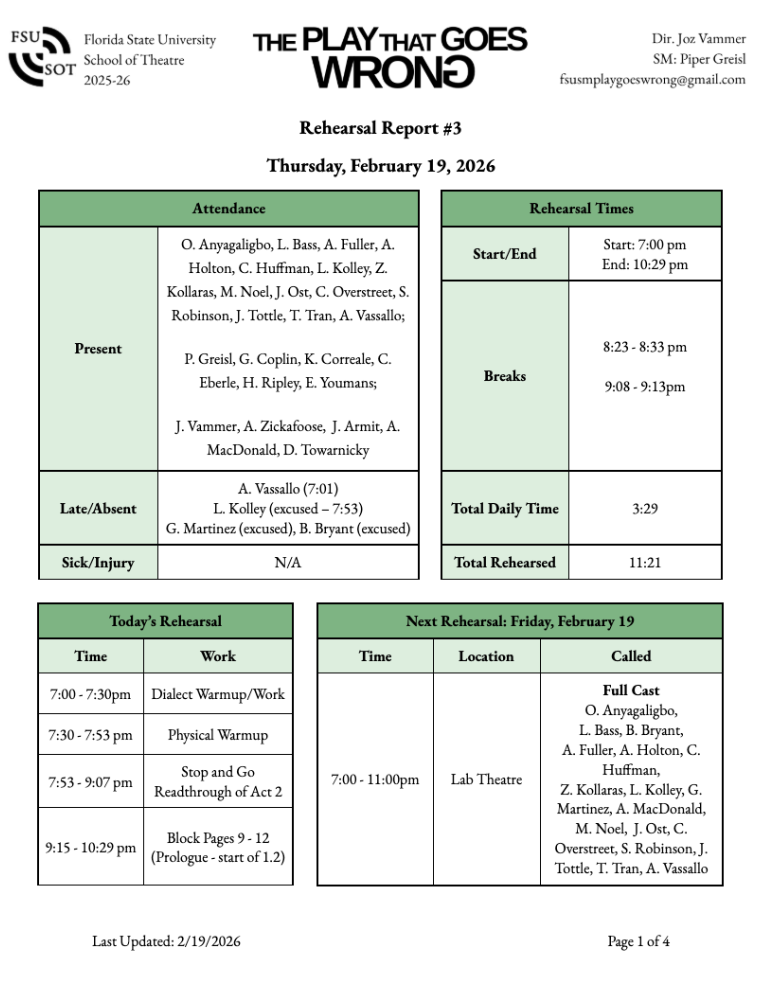
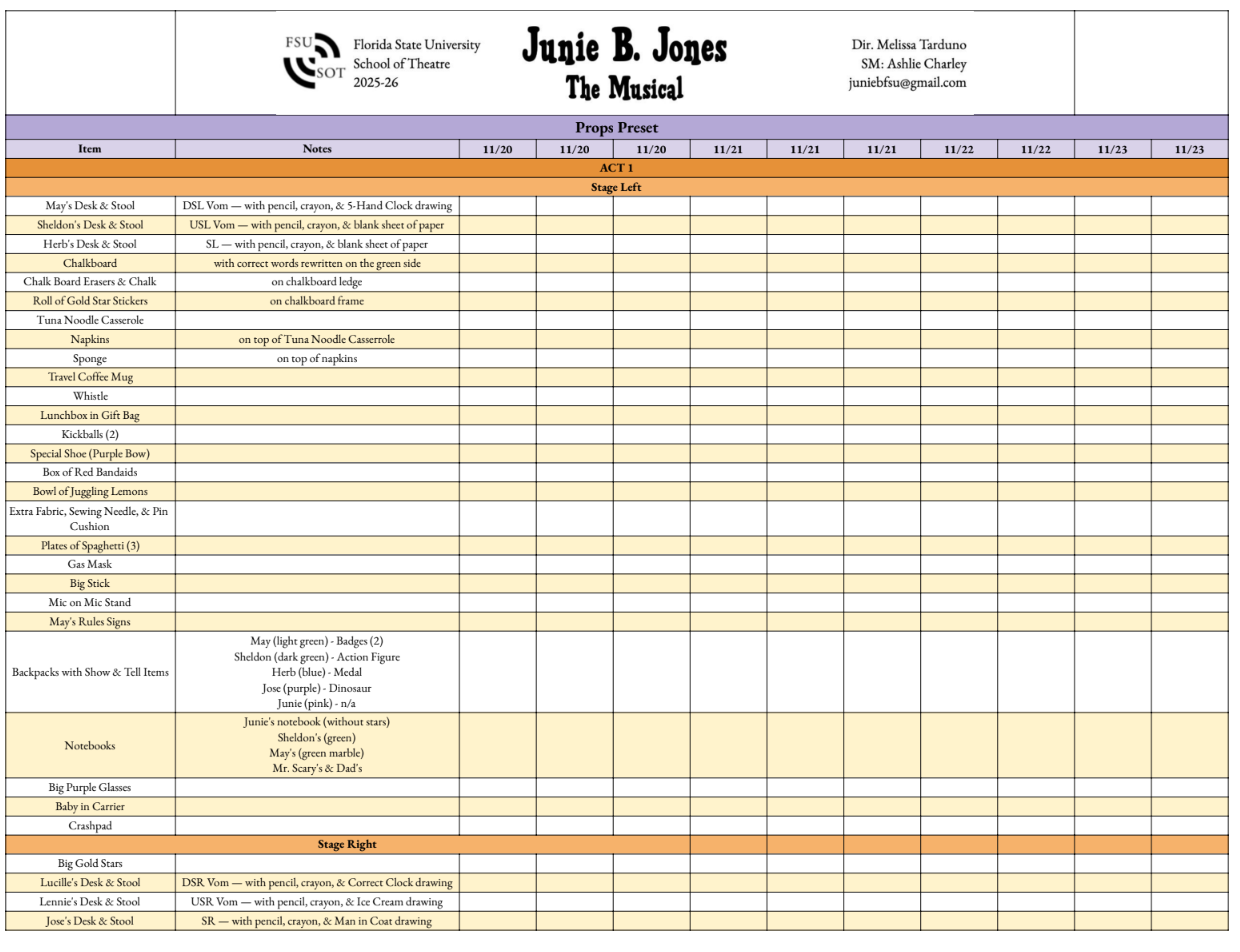
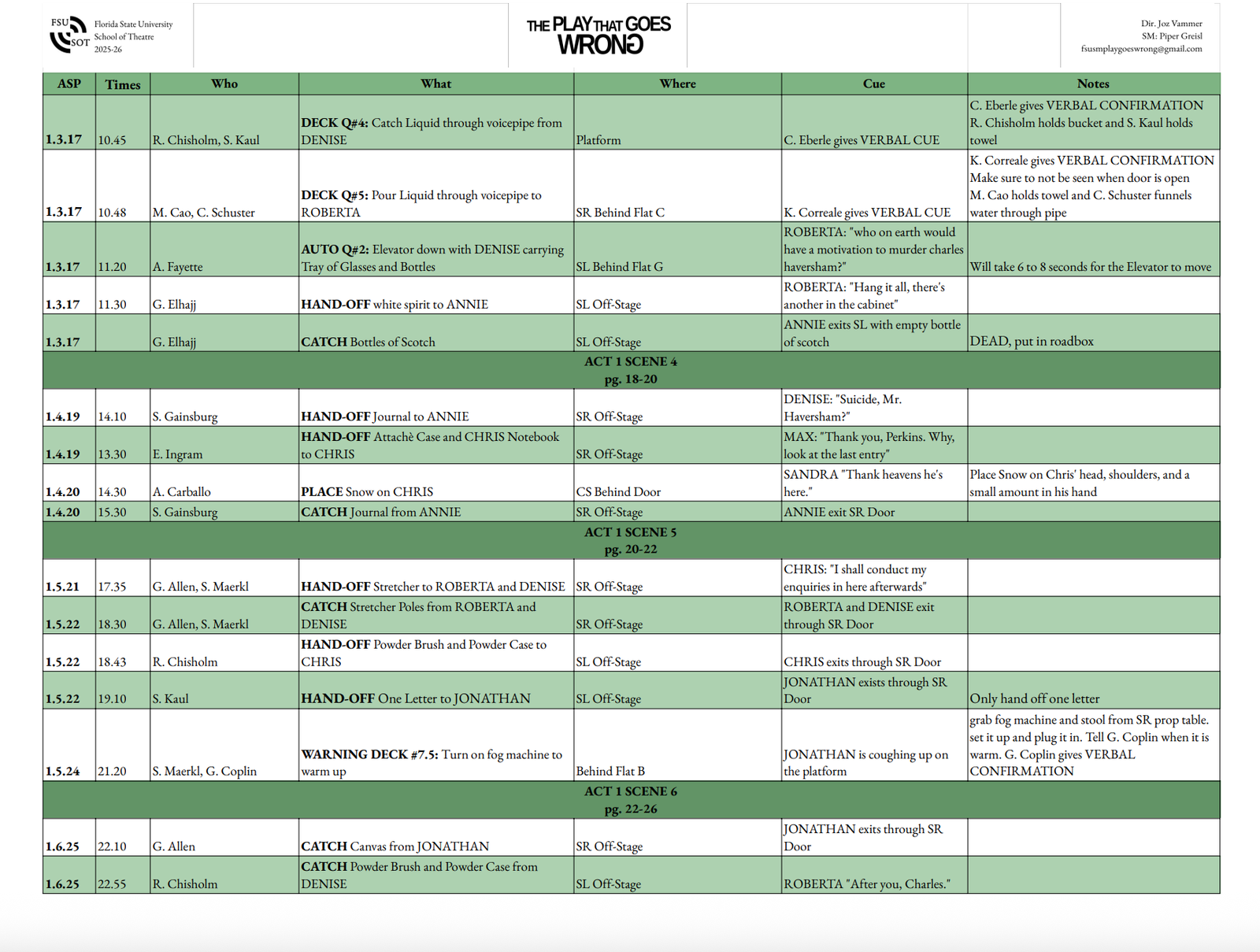
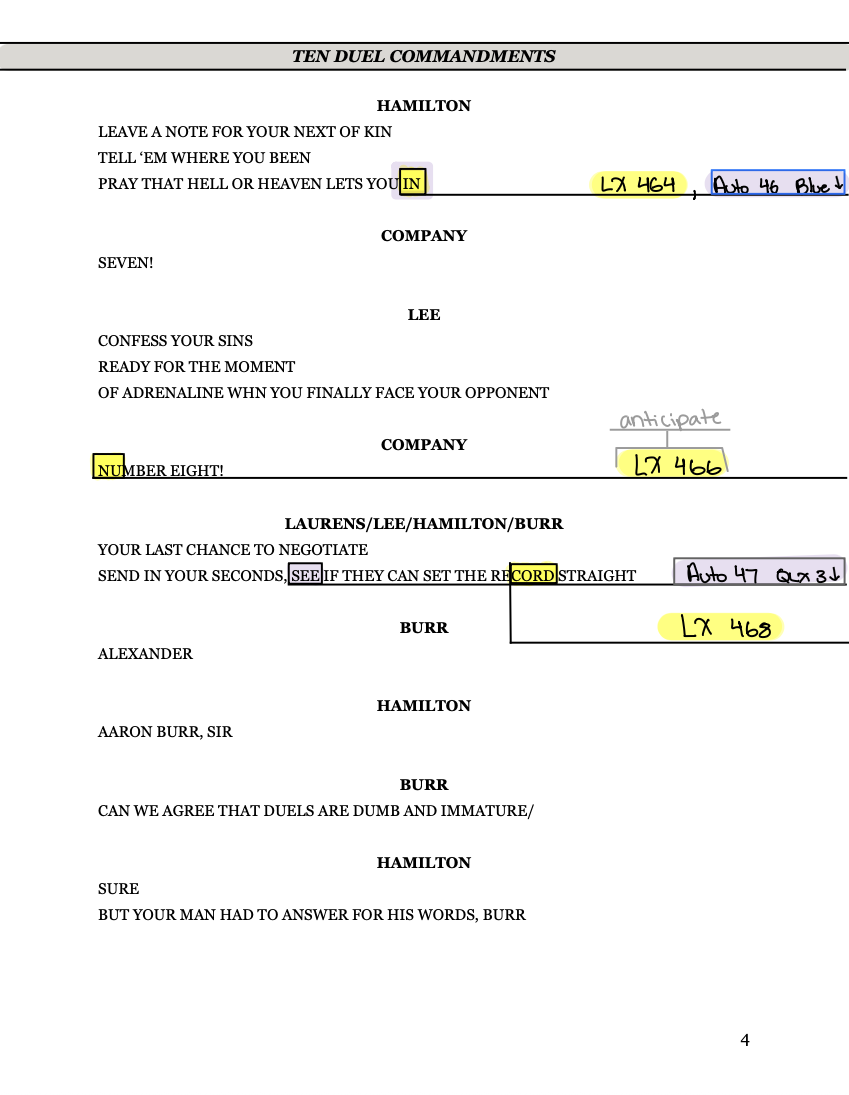
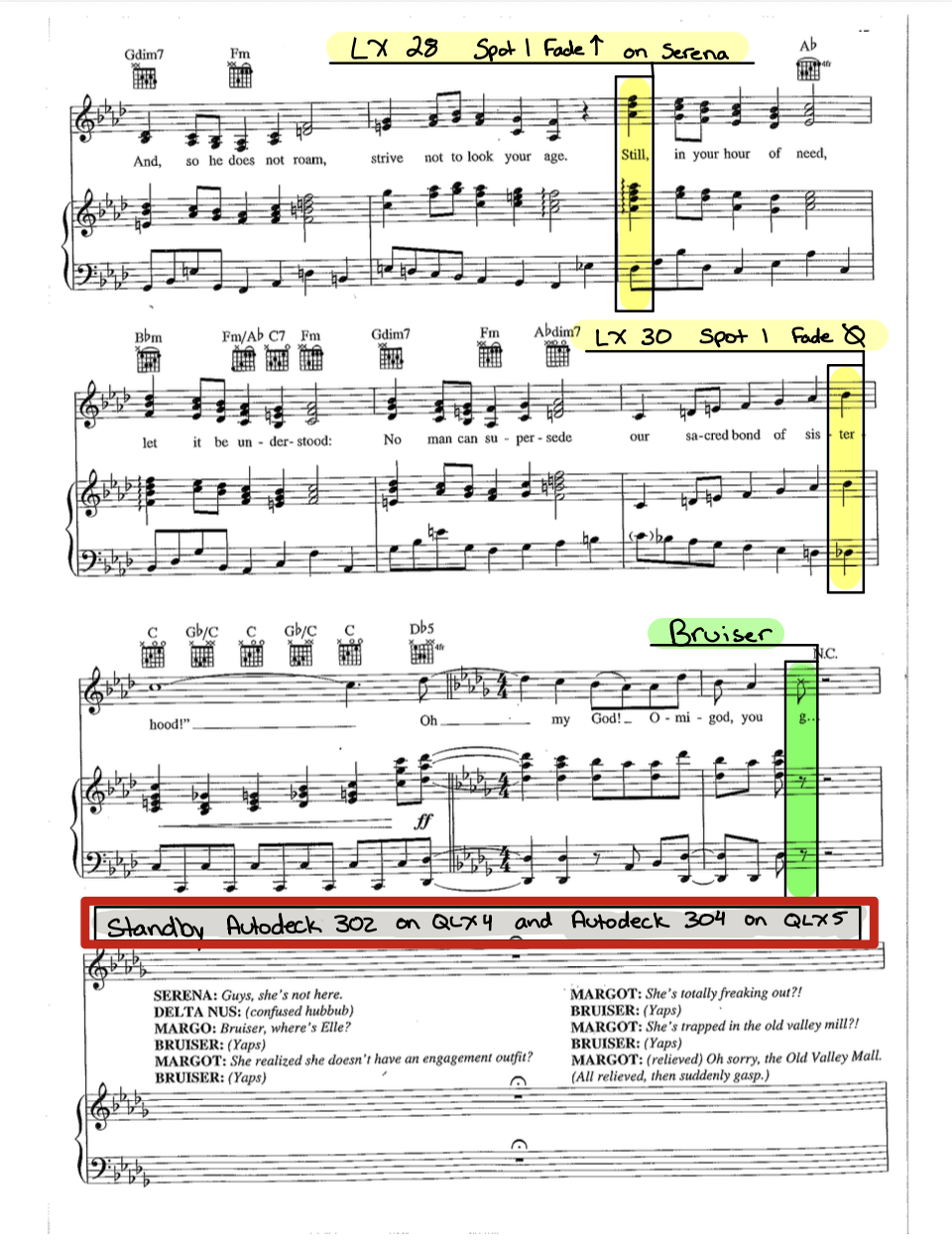
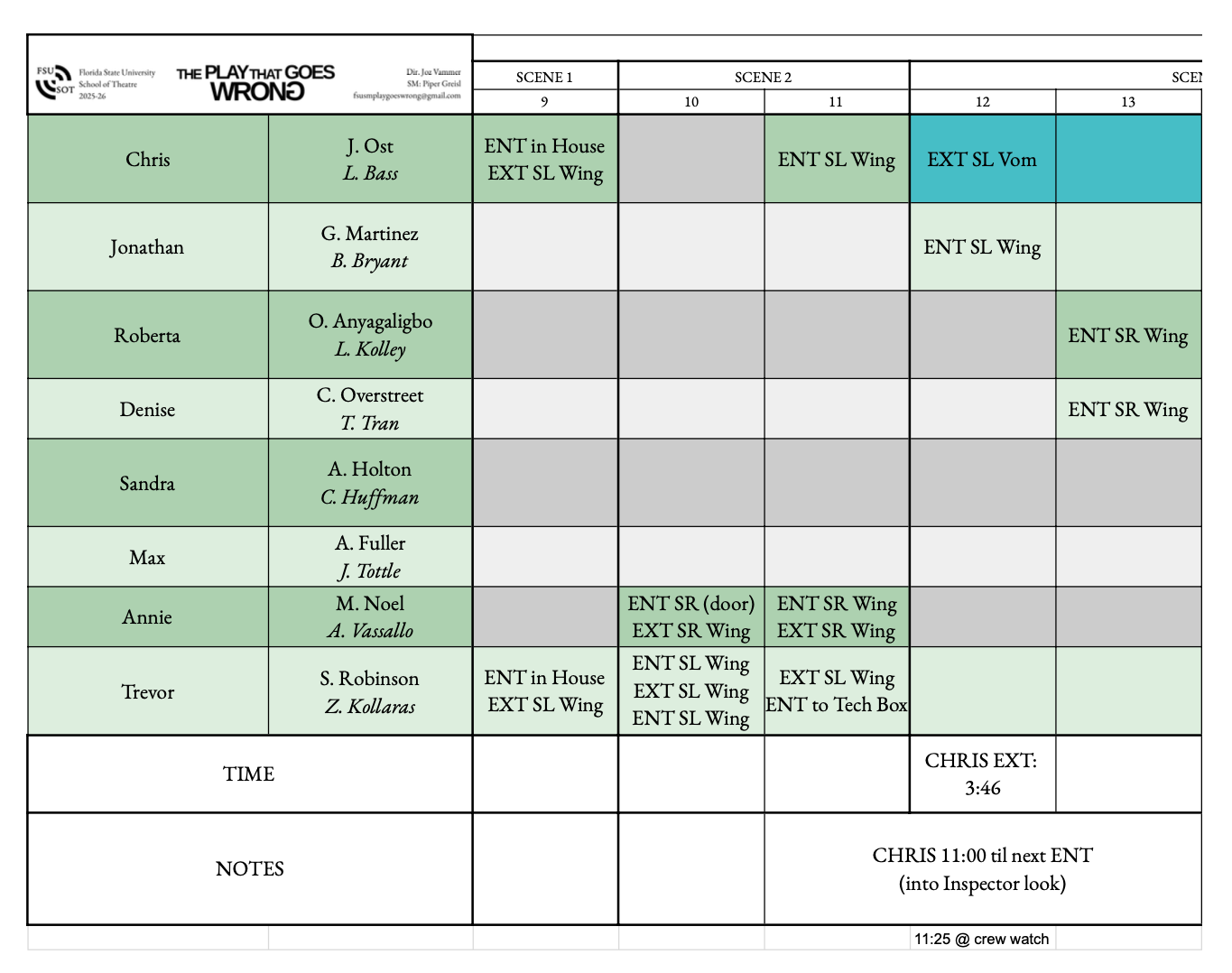
Paperwork Samples
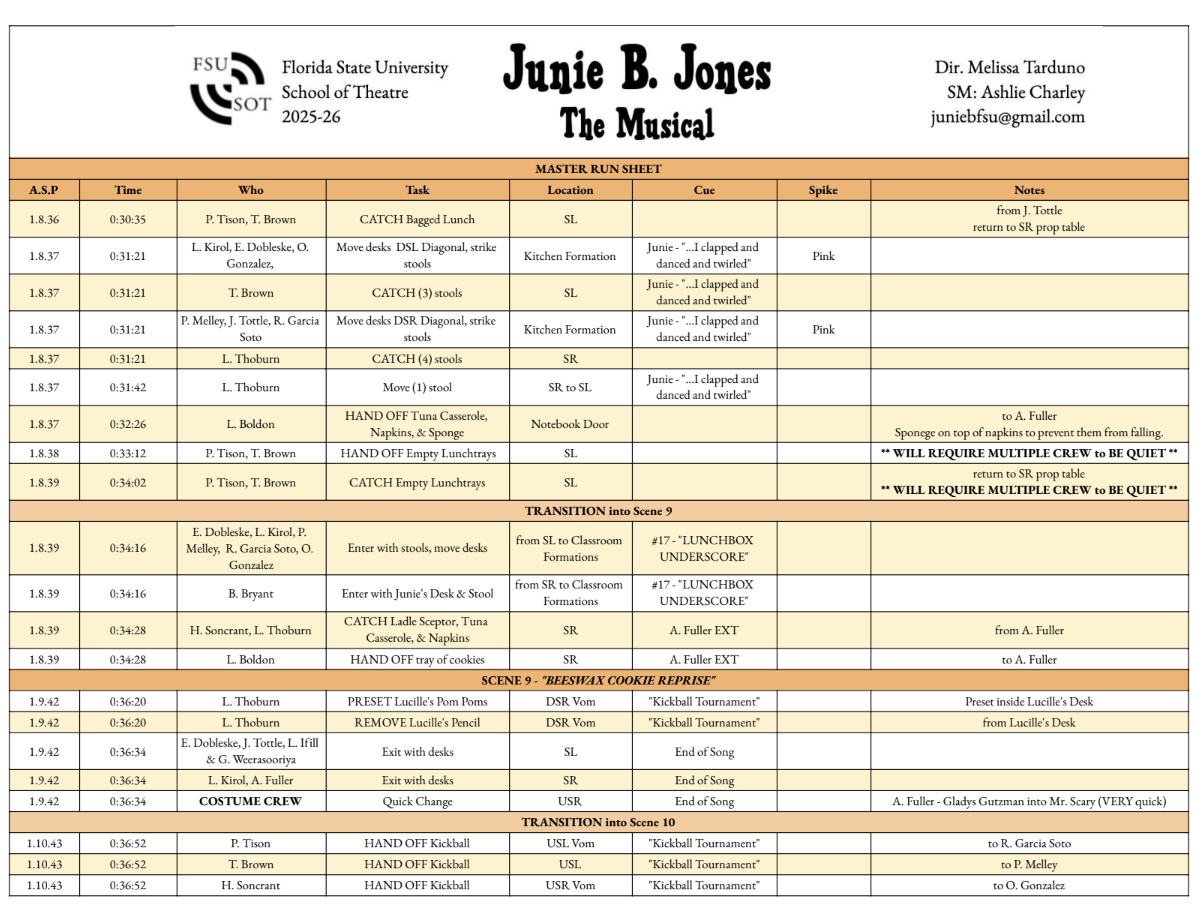
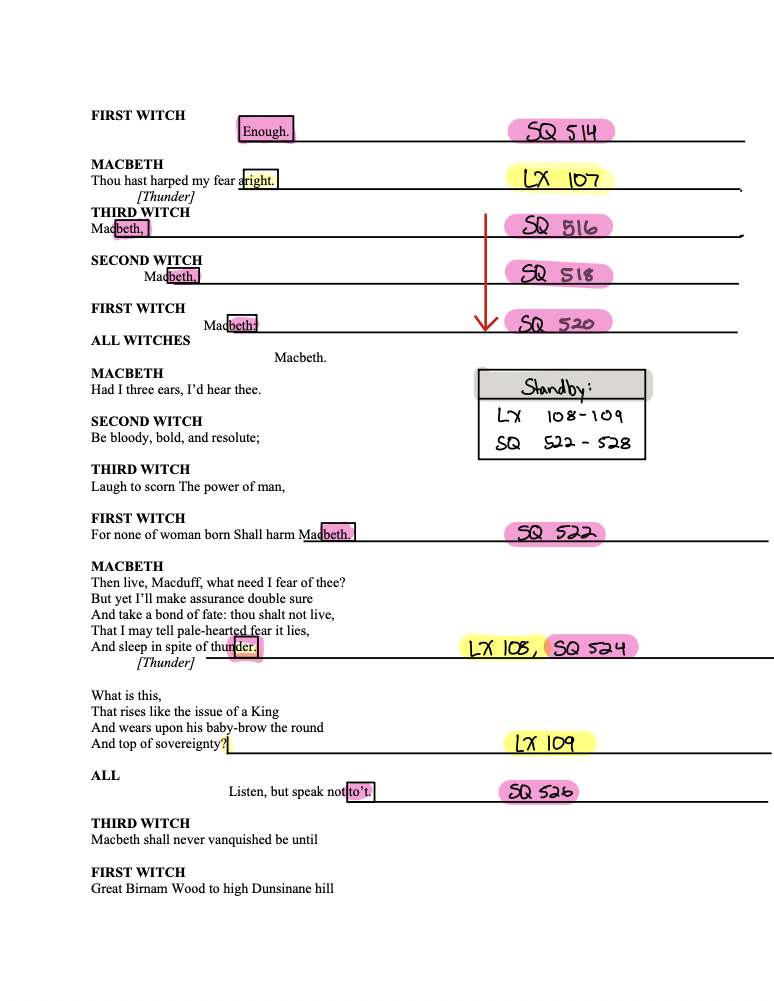
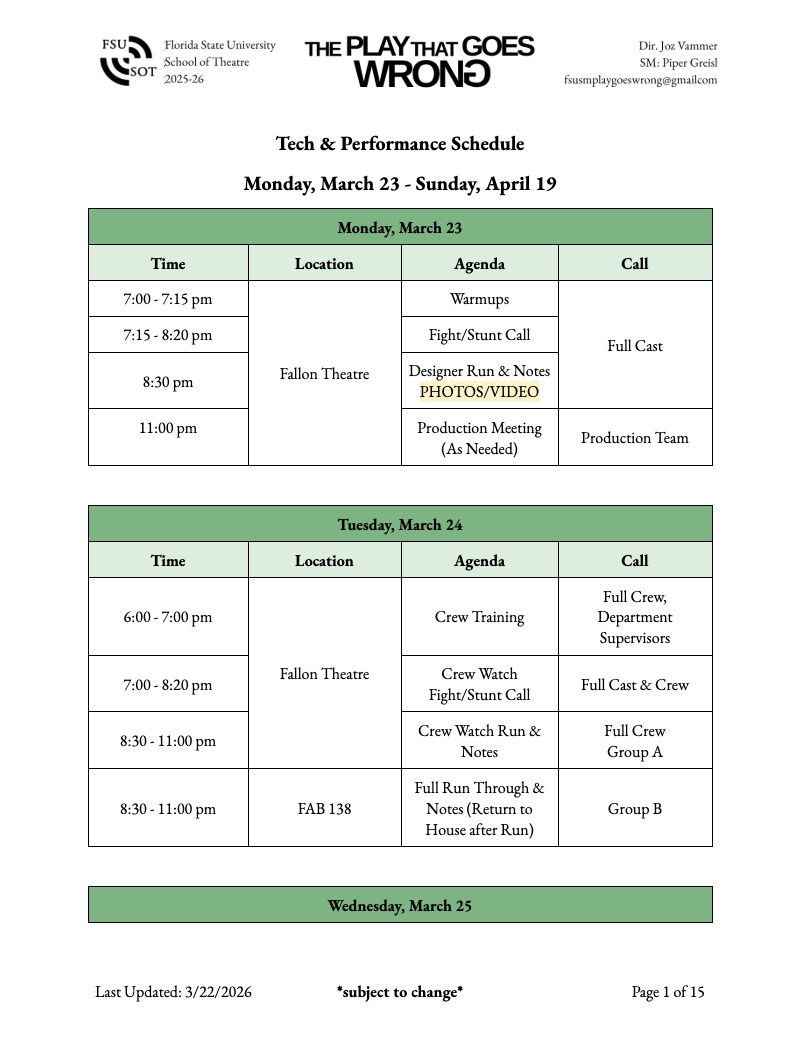
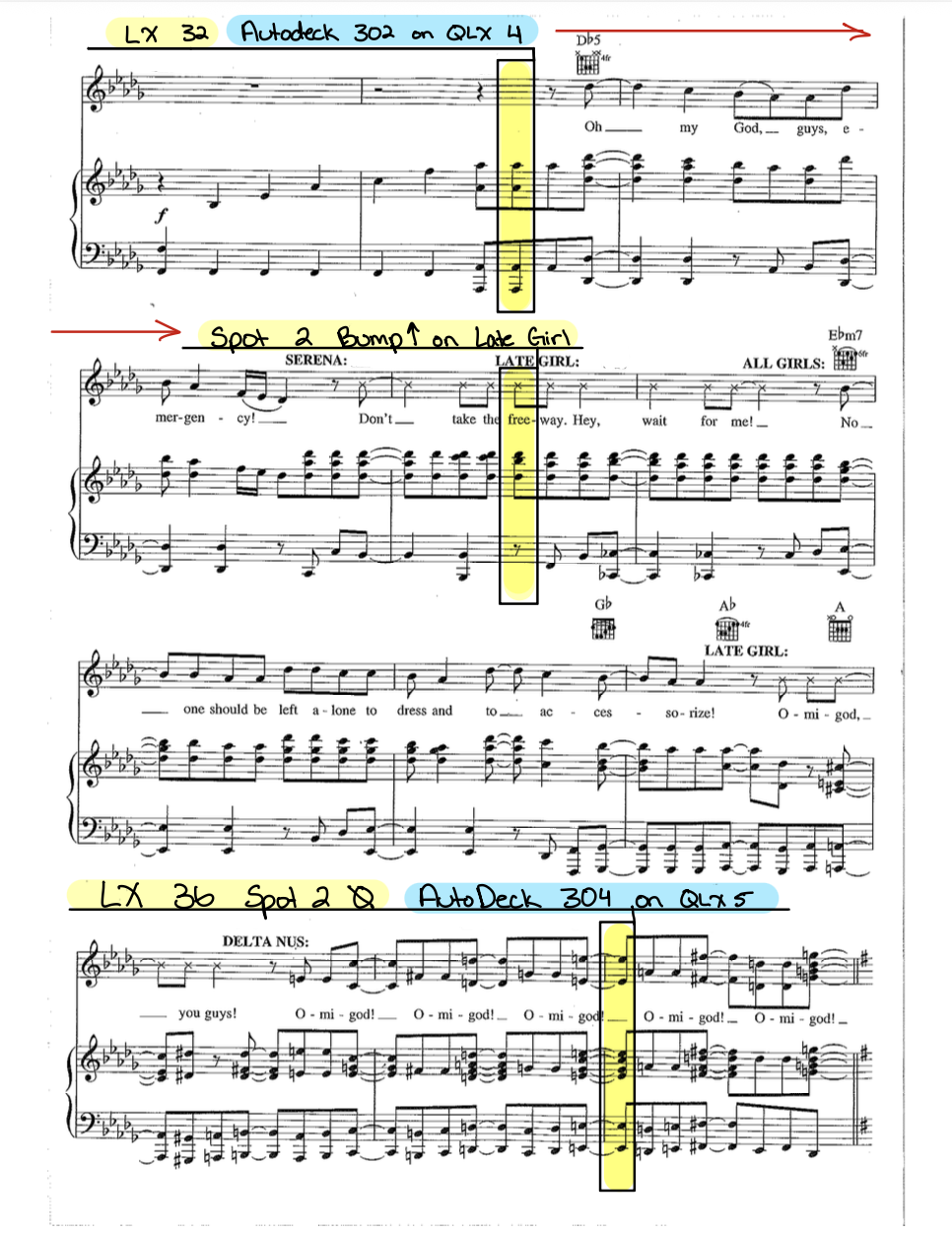
I approach paperwork with a focused and structured display, from Daily Calls and Calling Scripts to Master Runs and Props Lists. I find that harmony between paperwork design and precise content allows for streamlined communication between stage management, crew, production, and cast. For clearer viewing and details of these samples, select one below! More examples available upon request.